
Want a free masterclass in rider biomechanics?
Aug 19, 2026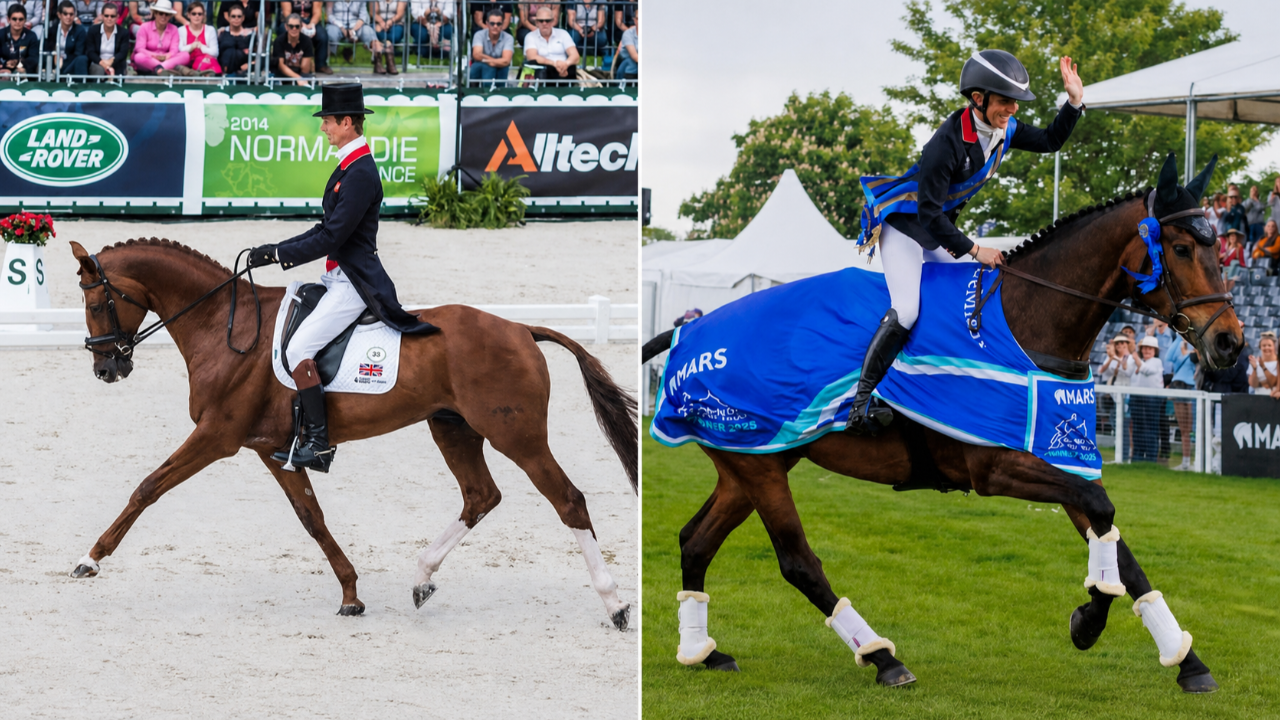
Want a free masterclass in rider biomechanics?
Watch William Fox-Pitt and Ros Canter back-to-back.
Top riders don’t all ride with the exact same style—and they shouldn’t. Different bodies create different advantages, challenges, and sources of leverage.
That becomes especially obvious when you compare two riders at opposite ends of the physical spectrum.
At 6'5", William Fox-Pitt is one of the tallest riders to compete at the top of the sport. He also holds the record with 14 five-star wins.
For anyone newer to eventing: William was one of the defining riders of his era. If he arrived at an event, he was one of the riders everyone knew they had to beat—and frequently couldn’t.
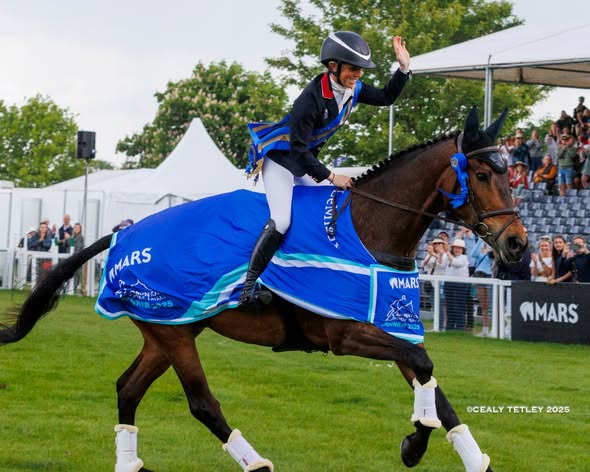
Ros Canter, meanwhile, is 5'2" and often one of the shortest riders in the field—despite riding some very large, powerful horses. Lordships Graffalo, for example, is 17.1 hands.
Both are extraordinary riders.
But they cannot use their bodies in exactly the same way.
William’s height gives him long levers and the ability to create a significant influence through relatively subtle changes in his position, angles, and balance. The advantage is that he can make adjustments that appear almost imperceptible.
The challenge is that those long levers must be extraordinarily well controlled. A small unintended movement can have a disproportionately larger effect.
Ros has a much more compact frame relative to the horses she rides. She may produce less influence through body mass and leverage alone, but that can also allow her to stay incredibly light, quick, and unobtrusive.
The challenge is developing horses that remain exceptionally responsive to precise aids—and knowing exactly when and how to use her body when more influence is required.
This isn’t about deciding which body type is “better.”
It’s about recognizing that every rider’s body gives them certain advantages—and certain weaknesses.
Long legs are useful until they become unstable.
A tall upper body is useful until it throws the horse off balance.
Being small and light is useful until you need more influence than your position alone can create.
Every advantage has to be controlled. Every limitation has to be addressed through technique, timing, and training.
This is why copying another rider’s position without understanding its purpose rarely works. What is effective for their proportions, their horse, and that particular moment may not be effective for you.
If you truly want to become a student of the sport, don’t only watch top riders to see whether they jump clear.
Study them.
Watch their hip angle.
Watch where they place their center of gravity.
Watch how they use—or deliberately avoid using—their upper body.
Watch what changes when they need to rebalance, lengthen, shorten, turn, or recover from a mistake.
Then watch a rider with a completely different build solve the same problem.
It’s not enough to ride most days and take the occasional lesson. There is an enormous amount you can learn out of the saddle if you’re willing to study the sport with intention.
William Fox-Pitt and Ros Canter are a very good place to start. 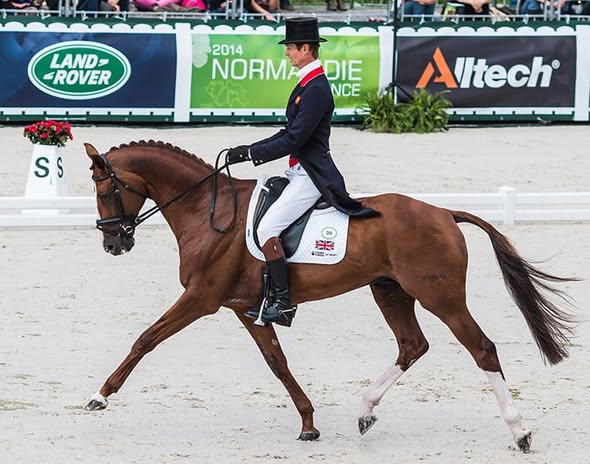
Enjoy what you've read? Why not sign up for the full Equine Academy Membership! Get exclusive access to dozens of hours of premium educational videos to supercharge your riding education!